Whatispiping Team, in association with Everyeng, is conducting an online pre-recorded Comprehensive Piping Stress Analysis Certificate course to help mechanical and piping engineers. Along with the regular content that the participants will be learning, there will be a dedicated 2-hour doubt-clearing session (/question-answer session) with the mentor.
Contents of Online Piping Stress Analysis with Caesar II Course
The program will be delivered using the most widely used pipe stress analysis software program, Caesar II. The full course is divided into 4 parts.
Part A will describe the basic requirements of pipe stress analysis and will help the participants to be prepared for the application of the software package.
Part B will describe all the basic static analysis methods that every pipe stress stress engineer must know.
Part C will give some understanding of dynamic analysis modules available in Caesar II; and
Part D will explain all other relevant details that will prepare a basic pipe stress engineer to become an advanced user. Additional modules will be added in this section as and when ready.
In its present form, the full course will roughly cover the following details:
Part A: Basics of Pipe Stress Analysis
What is Pipe Stress Analysis?
Stress Critical Line List Preparation with Practical Case Study
Inputs Required for Pipe Stress Analysis
Basics of ASME B31 3 for a Piping Stress Engineer
ASME B31.3 Scopes and Exclusions
Why stress is generated in a piping system
Types of Pipe Stresses
Pipe Thickness Calculation
Reinforcement Requirements
ASME B31.3 Code Equations and Allowable
Introduction to Pipe Supports
Role of Pipe Supports in Piping Design
Types of Pipe Supports
List of Pipe Supports
Pipe Support Span
How to Support a Pipe?
Pipe Support Optimization Rules
Pipe Support Standard
Support Engineering Considerations
What is a Piping Isometric?
What is an Expansion Loop?
Bonus Lecture: Introduction to Pipe Stress
Bonus Lecture: Pressure Stresses in Piping
Part-B: Static Analysis in Caesar II
Introduction to Caesar II
Getting Started in Caesar II
Stress Analysis of Pump Piping System
Creating Load Cases
Wind and Seismic Analysis
Generating Stress Analysis Reports
Editing Stress Analysis Model
Spring Hanger Selection and Design in Caesar II
Introduction
Types of Spring Hangers
Components of a Spring Hanger
Selection of Variable and Constant Spring hangers
Case Study of Spring Hanger Design and Selection
Certain Salient Points
Flange Leakage Analysis in Caesar II
Introduction
Types of Flange Leakage Analysis and Background Theory
Case Study-Pressure Equivalent Analysis
Case Study-NC Method
Case Study-ASME Sec VIII method
Stress Analysis of PSV Piping System
Introduction
PSV Reaction Force Calculation
Applying PSV Reaction force
Practical Case Study
Certain best practices
Heat Exchanger Pipe Stress Analysis
Introduction
Creating Temperature Profile
Modeling the Heat Exchanger
Nozzle Load Qualification
Practical Case Study
Methodology for shell and tube inlet nozzle stress analysis
Vertical Tower Piping Stress Analysis
Introduction
Creating Temperature Profile
Equipment Modeling
Modeling Cleat Supports
Skirt temperature Calculation
Nozzle Load Qualification
Practical Example
Storage Tank Piping Stress Analysis
Introduction
Reason for Criticality of storage tank piping
Tank Settlement
Tank Bulging
Practical example of tank piping stress analysis
Nozzle Loading
Pump Piping Stress Analysis
API610 Pump nozzle evaluation using Caesar II
Part C: Dynamic Analysis is Caesar II
Introduction-Dynamic Analysis in Caesar II
Types of Dynamic Analysis
Static vs Dynamic Analysis
Dynamic Modal Analysis
Equivalent Static Slug Flow Analysis
Dynamic Response Spectrum Analysis
Part D: Miscellaneous other details
WRC 297/537 Calculation
What are WRC 537 and WRC 297?
Inputs for WRC Calculation
WRC Calculation with Practical Example
Underground Pipe Stress Analysis
Jacketed Piping Stress Analysis
Create Unit and configuration file in CAESAR II
ASME B31J for improved Method for i, k Calculation in Caesar II
Discussion about certain Questions and Answers
GRE/FRP Pipe stress analysis
GRE Pipe Stress Analysis using Caesar II
GRE Stress Analysis-Basics
FRP Pipe Stress Analysis Case Study
GRE Flange Leakage Analysis
Meaning of Stress Envelope; Understand it
Reviewing A Piping Stress System
Introduction
What to Review
Reviewing Steps
Case Study of Reviewing Pipe Stress Analysis Report
Reviewing Best Practices
FIV Study
Flow Induced Vibrations-Introduction
What is Flow-Induced Vibration (FIV)?
Flow-Induced Vibration Analysis
Corrective-Mitigation Options
AIV Study
Introduction
What is Acoustic-Induced Vibration (AIV)?
Acoustic-Induced Vibration Analysis
Corrective-Mitigation Options
How to Enroll for this Course
To join this course, simply click here and click on Buy Now. It will ask you to create your profile, complete the profile, and make the payment. As soon as the payment is complete, you will get full access to the course. If you face any difficulty, contact the Everyeng team using the Contact Us button on their website.
Detailed Online Course on Pipe Stress Analysis (25 hours of Content) with Certificate + Free Trial Version of Pipe Stress Analysis Software
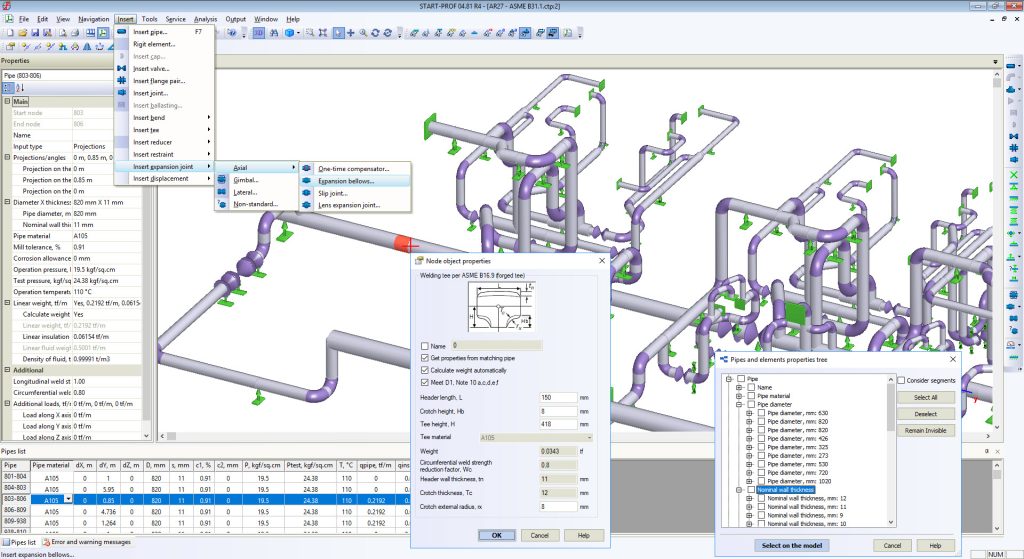
This course is created by an experienced pipe stress analysis software developer (15+ years experience), Ph.D. and covers all features of onshore above ground and underground piping and pipeline analysis. This course is based on the PASS/START-PROF software application, though it will be interesting for users of any other pipe stress analysis software tools as it contains a lot of theoretical information.
The course consists of video lectures, quizzes, examples, and handout materials.
Type: an on-demand online course.
Duration: 25 hours.
Course price:200 USD30 USD.
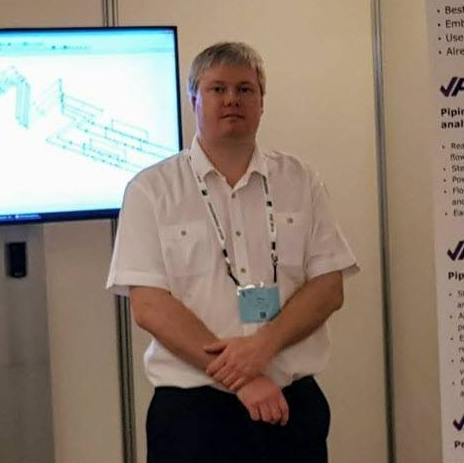
Instructor: Alex Matveev, head of PASS/START-PROF Pipe Stress Analysis Software development team. Always available for your questions at Udemy, LinkedIn, Facebook
Alex Matveev
Who should attend
All process, piping, and mechanical engineers specialized in design and piping stress analysis for the specified industries:
Oil & Gas (Offshore/Onshore)
Chemical & Petrochemical
Power (Nuclear/ Non-Nuclear)
District Heating/Cooling
Water treatment
Metal industry
Training software
All trainees are provided with a free 30-day pipe stress analysis software license (PASS/START-PROF). How to get a free license
Certificate
After finishing the course, you will receive Certificates from both the Udemy and from PASS Team.
How to use PASS/START-PROF software for pipe stress analysis
How to work with different load cases
How to model different types of piping supports, the spring selection
What are stress intensification and flexibility factors and how to calculate them using FEA and code requirements
How to model trunnion and lateral tees
How to model pressure vessels and columns connection: modeling local and global flexibility, WRC 297, WRC 537, FEA
How to model storage tank connection (API 650)
How to model connection to air-cooled heat exchanger API 661, fired heater API 560, API 530
How to model connection to Pump, Compressor, Turbine (API 610, API 617, NEMA SM23)
How to model buried pipelines: Submerged Pipelines, Long Radius Bends Modeling of Laying, Lifting, Subsidence, Frost Heaving, Fault Crossing, Landslide
Underground pipelines Seismic Wave Propagation, Pipe Buckling, Upheaval Buckling, Modeling of Pipe in Chamber, in Casing with Spacers. Electrical Insulation kit
Minimum design metal temperature calculation MDMT calculation, impact test
Modeling of Expansion Joints, Flexible Hoses, Couplings
Import and export to various software: CAESAR II, AVEVA, REVIT, PCF format, etc.
How to do Normal Modes Analysis and how to interpret results
ASME B31G Remaining Strength of Corroded Pipeline Calculation
Achieving Zero Failures: The Evolution of Intelligent Pipeline Integrity Management
Introduction: The Silent Threats Beneath Your Infrastructure
Millions of miles of pipelines operate unseen, transporting critical resources that power modern economies. Yet these critical infrastructure assets face relentless threats. Over time, they become vulnerable to hidden defects—corrosion, dents, stress from ground movement—anomalies that silently compromise integrity and pose significant risks if left undetected.
The Central Question: How do you manage what you cannot see?
The Answer: In-Line Inspection (ILI) technology, combined with rigorous engineering assessment and strategic repair methodologies. Modern pipeline integrity management is a data-driven discipline that transforms uncertainty into actionable intelligence.
Part I: Detection and Inspection
The Cornerstone Technology: In-Line Inspection (ILI)
In-Line Inspection is the foundation of modern Pipeline Integrity Management (PIM). It enables non-destructive examination of internal and external pipeline conditions without interrupting service—a critical advantage for operational reliability.
ILI utilizes autonomous robotic devices, colloquially known as “smart pigs,” equipped with advanced sensor systems. Unlike time-consuming manual inspections with limited coverage, ILI provides continuous assessment across extensive pipeline systems, from small-diameter lines to those exceeding 56 inches.
The Three Core Questions of Any Integrity Program
Every integrity program must answer three fundamental questions:
1. Is it damaged? (Geometry)
Are there dents, restrictions, or other deformations that compromise the pipe’s structure?
Mechanical damage remains a leading cause of pipeline failures.
2. Where is it? (Mapping)
What is the pipeline’s precise 3D location?
Ground movement, soil instability, and external forces can shift the pipe, inducing dangerous stress and strain.
3. Is it corroding? (Metal Loss)
Is the pipe wall thinning due to corrosion or other metal loss mechanisms?
Even small defects can grow into critical threats over time.
The Inspection Process: A Systematic Three-Stage Approach
The ILI process follows a well-established sequence:
Stage 1: Launch
The ILI tool is introduced into the pipeline via a specialized launcher station.
Stage 2: Traverse & Inspect
Upstream pressure propels the device along the pipeline as onboard sensors continuously acquire high-resolution data.
Inspection speeds range from ~0.5 m/s for specialized crack detection to 5 m/s for standard corrosion screening.
Stage 3: Receive
At the pipeline terminus, a receiver station safely captures and extracts the tool for data retrieval
Part II: Inspection Technologies—Four Approaches to Detection
Modern pipeline operators have access to four primary ILI technologies, each designed to address specific threats:
1. Conventional Magnetic Flux Leakage (MFL)
How It Works: Conventional MFL saturates the pipe wall with a powerful magnetic field. Metal loss (corrosion defects) disrupt this field, causing flux to “leak” outside the wall. A circumferential array of sensors detects this leakage signal, which is recorded as an analog log for later interpretation.
Capabilities:
Most widely used device for corrosion detection
Highly effective at detecting the presence of metal-loss defects
Baseline tool for broad, initial screening
Limitations:
No Precise Sizing: Cannot determine length or width of anomalies
Subjective Grading: Output relies on analog signal amplitude, classified as Light (<30% penetration), Moderate (30-50%), or Severe (>50%)
Location Ambiguity: Cannot distinguish between internal and external defects
Requires Correlation Excavations: Costly “digs” are necessary to verify signal amplitudes against actual defect depth
Blind to Uniform Loss: Cannot detect uniform wall thickness reduction, only profile changes
Best For: Cost-effective screening of low-risk pipelines and initial threat detection.
2. High-Resolution Magnetic Flux Leakage (MFL)
The Evolution: High-Resolution MFL employs the same magnetic principle as conventional tools but incorporates significant technological upgrades:
Higher Sensor Density: Many more smaller, more sensitive sensors create a detailed “picture” of the pipe wall
Location Sensors: A secondary bank of tri-axial sensors determines whether anomalies are internal or external
Digital Processing: Raw data is converted into a high-fidelity digital profile, enabling computer enhancement and precise measurement
Capabilities:
Accurate Sizing: Provides precise dimensions of defects (depth, length, and width)
Clear Location: Reliably distinguishes between internal and external defects
Digital Output: Results delivered as digital wall thickness profiles, not analog logs
Direct Assessment: Data is precise enough for defect assessment without correlation excavations, enabling failure pressure calculations
The Trade-off: The cost of a high-resolution survey is approximately 5–6 times that of a conventional MFL survey. However, this premium is often offset by eliminating costly excavations and enabling more confident asset management decisions.
Best For: Detailed integrity assessments, pitting corrosion analysis, interacting defects, and failure pressure calculations.
3. Ultrasonic Tools (UT)
How It Works: An ultrasonic transducer emits a high-frequency sound pulse toward the pipe wall. The tool measures the time for this pulse to reflect off both the inner and outer walls. The time difference directly calculates exact wall thickness. The “standoff” measurement (time to first reflection) indicates whether metal loss is internal or external.
Capabilities:
Direct Measurement: Provides actual wall thickness, not an inference based on a signal
High Sensitivity: Can detect wall thinning of as little as 10%
Definitive Location: The standoff measurement naturally identifies corrosion as either internal or external
Unmatched Accuracy: Among the most precise ILI technologies available
Critical Limitations:
Requires Liquid Couplant: Must operate in a homogenous liquid environment to transmit sound waves. For gas lines, this requires a special liquid or gel slug, adding operational complexity
Slow Speed: Must operate at relatively slow speeds (~1 m/s maximum) to ensure all data is collected
Best For: Baseline integrity checks, pre-inspection clearance runs, and applications where absolute wall thickness verification is critical (typically liquid lines).
4. Geometry and Caliper Tools
How It Works: The tool is fitted with a series of high-sensitivity “fingers” around its circumference. As it moves, these fingers press against the inner pipe wall. When a dent or restriction is encountered, the fingers deflect (compress). The amplitude of deflection is recorded to size the anomaly, while an odometer wheel tracks distance for location.
Capabilities:
Simple, Reliable Detection: Cost-effective detection of diameter restrictions and deformations
Low Operational Cost: Relatively inexpensive compared to other ILI methods
Significant Limitations:
Limited Circumferential Resolution: The finite number of sensor arms means true dent shape can be misinterpreted
Mechanical Artifacts: Fingers can “lift off” at girth welds or sharp edges, distorting perceived depth and shape
Requires Interpolation: Sparse data must be interpolated to approximate true dent profile
No Metal Loss Detection: Cannot detect or size corrosion defects
Best For: Cost-effective detection of geometric deformations in low-risk pipelines.
The Data Revolution: High-Resolution Inspection Transforms Diagnosis
The difference between low-resolution and high-resolution data is profound:
Low-Resolution Data (mechanical caliper): Produces fragmented, sparse data requiring significant post-processing. Often leads to unnecessary digs based on simple depth rules or, worse, misinterpretation of severe threats.
High-Resolution Data (ultrasonic geometry): Provides true-to-life profiles, enabling precise shape characterization and accurate engineering assessment.
Multi-Mission Integration: One Run Replaces Three
Historically, assessing different threats required different tools and multiple runs:
One for metal loss (MFL)
One for geometry (caliper)
One for positioning (IMU)
The Modern Solution: Advanced multi-mission systems now integrate MFL, high-density geometry sensors, and Inertial Measurement Unit (IMU) mapping into a single run.
Advantages:
Reduced Downtime: One run instead of three
Enhanced Data Correlation: All datasets are perfectly aligned by default
Improved First-Run Success: ~95% success rate (vs. industry benchmark of ~90%)
The Hidden Threat: Geohazards and Pipeline Movement
Beyond corrosion and mechanical damage, the most insidious threats are often those caused by ground movement and environmental instability.
Understanding Inertial Measurement Units (IMU)
An IMU is the core technology for accurately mapping a pipeline’s absolute position in three-dimensional space, using:
Gyroscopes: Measure angular rate (degrees per second) around three axes (X, Y, Z), determining the tool’s orientation and direction changes
Accelerometers: Measure linear acceleration along the same three axes, tracking movement through space
Combined with odometer data and corrected by periodic above-ground GPS control points, IMU data generates a continuous, highly accurate 3D centerline map of the pipeline.
From Centerline Coordinates to Actionable Bending Strain
The true power of IMU mapping emerges when comparing data from successive runs. By quantifying movement and its effect on the pipeline:
Calculating Curvature: The change in pipeline angle over distance defines curvature (κ). A change in curvature between runs indicates movement.
Calculating Bending Strain: Bending strain (ε) is directly proportional to pipeline diameter (D) and curvature:
ε = (Pipe Diameter / 2) × Curvature (κ)
This allows direct assessment of stress induced by ground movement, pinpointing high-strain areas where risk is greatest.
Case Study: Detecting a Landslide Before Failure
An inertial survey of an NPS 30 gas line in a mountainous region with known slope instability revealed:
Finding: 1.7 meters of horizontal movement over a 500-meter section
Impact: Large bending strains at slide boundaries, increasing risk at multiple girth welds
Action: Geotechnical survey confirmed findings; the section was excavated to relieve strain and prevent failure
This demonstrates the critical value of ILI in detecting unknown areas of slope instability before they become catastrophic.
Part III: Assessment and Diagnosis
From Signal to Diagnosis: Quantifying Defect Severity
Once an anomaly is detected, the next critical step is assessment: Is the pipeline safe to operate at its Maximum Allowable Operating Pressure (MAOP)?
This assessment is governed by established engineering codes based on decades of research, full-scale burst tests, and fracture mechanics principles.
Result: More accurate than original B31G, reducing unnecessary repairs while maintaining safety
Key Advantage: Permits corroded areas ≤20% wall thickness to remain in service under specific conditions, regardless of length.
Use Case: Industry-standard detailed and accurate fitness-for-service assessments.
3. Finite Element Analysis (FEA)
Approach:
Creates a 3D CAD model of the pipe and defect
Divides the model into thousands of finite elements
Uses advanced solvers to simulate pressure loads and calculate stress/strain in each element
Models actual defect geometry and material stress-strain curve
Advantages Over Codes:
Models actual defect geometry instead of idealized shape
Uses true material stress-strain curve, accounting for plasticity and strain hardening
Accurately simulates complex stress states (wrinkles, dents, elbows)
Provides highest precision assessment
Use Case: Critical defects, complex geometries, interacting threats, and high-consequence areas.
Special Consideration: Elbows and Complex Geometry
Stress in a pipeline is not uniform. In elbows, pressure creates significantly higher stress on the inner curve (intrados) and lower stress on the outer curve (extrados), described by the Lorenz Factor (LF):
Intrados: LF = 1.25 (25% higher stress)
Crown: LF = 1.0 (nominal stress)
Extrados: LF = 0.875 (12.5% lower stress)
Critical Implication: An identical corrosion pit is far more severe on the intrados. Standard codes often fail to capture this complexity; FEA provides precise evaluation.
Part IV: Repair and Mitigation
Three Principal Repair Methods
Once a defect is deemed unacceptable, a repair must restore pipeline integrity. The method depends on defect type, severity, and operational constraints.
1. Coating Repair
For: Minor corrosion where structural integrity is not compromised
Function: Arrests corrosion growth by restoring the protective barrier
Advantage: Minimally invasive
2. Cut-Out and Replacement
For: Severe or through-wall defects requiring complete removal
Process: Remove the damaged pipe section entirely and weld in a new piece
Characteristic: Most definitive but most disruptive method
3. Welded Steel Sleeves
Welded sleeves are classified into two categories:
Type A Sleeve (Reinforcing)
Function: Reinforces the pipe against localized external loads and arrests crack growth (not pressure-containing)
Application: Non-leaking defects like external corrosion, gouges, dents
Installation: Welded only along longitudinal seams (simpler, faster)
Type B Sleeve (Pressure-Containing)
Function: Creates a fully sealed enclosure around the defect, making it pressure-containing
Application: Through-wall defects, active leaks, severe corrosion where breach is possible
Installation: Fully welded around entire perimeter, often with epoxy filler to transfer load
4. Composite Repair Wraps (Modern Alternative)
Advantages:
No Hot Work: Eliminates risk of explosion on live pipelines
Conformability: Can be applied to complex geometries (elbows, tees)
Corrosion Immune: The composite material itself is immune to corrosion
Standards: Governed by ASME PCC-2 and ISO 24817
Capability: Can repair defects up to 80% wall loss
Integrated Analysis: Correlating Multiple Threats
The true value of multi-mission tools lies in analyzing a single, homogenous dataset where all features are perfectly aligned. This enables identification of interacting threats that pose significantly higher risk:
Examples of Threat Interaction:
Dent on a Girth Weld
Amplifies structural significance due to potential material and construction anomalies
Wrinkle from Compressive Strain
Direct result of compressive forces quantifiable by IMU strain analysis
Corrosion in a High-Strain Area
More likely to fail than identical corrosion in stable sections
Case Study: Upheaval Buckle Assessment
An inspection of an NPS 8 gas line that buckled due to elevated temperatures with insufficient backfill demonstrated the power of combined data:
Geometry Data (Caliper): Precisely identified a 1 cm wrinkle on the bottom of the pipe
Mapping Data (IMU): Calculated high bending strain of 1.1% at the buckle’s apex
Integrated Insight: Confirmed failure mechanism (compressive buckling) and provided inputs for full fitness-for-service assessment
Beyond Corrosion: Security and Pilferage Detection
A modern advantage of high-resolution MFL is an unexpected benefit: detection of unauthorized pipeline connections.
The Problem
Product theft via unauthorized connections is a major, growing global threat to pipeline operators. Beyond revenue loss, these connections compromise pipeline integrity and create environmental and safety hazards.
The Solution
Modern high-resolution MFL systems can identify the unique signature of theft, specifically detecting pinholes down to 2 mm in diameter.
Capabilities:
Detects coincidence of new fixtures and small-diameter metal loss
Formally validated through blind tests and in-field dig verification
Enables operators to scan, identify, verify (through excavation), and secure against theft
The Complete Integrity Lifecycle
Modern pipeline integrity is a continuous cycle:
INSPECT → ASSESS → STRATEGIZE → REPAIR ↓ (Data feeds back into system to build predictive models)
INSPECT
Detect the initial signal with high-resolution ILI tools.
ASSESS
Diagnose severity using established codes (ASME B31G, Modified Criterion) and advanced methods (FEA) where justified.
STRATEGIZE
Manage long-term integrity with predictive maintenance frameworks like ASME B31.8S.
REPAIR
Implement durable solutions from welded sleeves to composite wraps, based on defect type and severity.
The Strategic Outcome: Safe, Compliant, Profitable Assets
Adopting a predictive integrity framework transforms pipeline management from a cost center into a strategic advantage:
Enhanced Safety
Quantifiable reduction in failure risk
Protection of public and environment
Regulatory Confidence
Defensible, data-backed Integrity program
Demonstrated compliance with all standards (ASME, API, PHMSA, PSR)
Extended Asset Life
Proactive interventions arrest degradation
Defers costly capital replacement projects
Optimized Operations
Maintenance budgets spent on prevention, not reaction
Maximizes value of every operational dollar
Conclusion: From Uncertainty to Intelligence
Modern pipeline integrity management is a paradigm shift from reactive “run to failure” maintenance to data-driven, predictive asset stewardship. By leveraging advanced ILI technologies, rigorous engineering assessment, and strategic repair methodologies, operators transform the uncertainty of hidden threats into actionable intelligence.
The result: Pipelines that operate safely, reliably, and profitably for decades.
The journey: From Signal to Solution.
Key Takeaways
Multi-threat detection now possible in single ILI run via integrated systems
High-resolution MFL provides accurate sizing, eliminating costly correlation digs
IMU mapping detects geohazards and quantifies bending strain from ground movement
Submerged pipeline stability is a crucial design element that ensures a pipeline remains in place when subjected to buoyant forces from water or saturated soil. The primary goal is to counteract this upward lift force by adding sufficient weight, keeping the pipeline stable in a cost-effective manner.
𝗠𝗲𝘁𝗵𝗼𝗱𝘀 𝗳𝗼𝗿 𝗕𝘂𝗼𝘆𝗮𝗻𝗰𝘆 𝗖𝗼𝗻𝘁𝗿𝗼𝗹
There are three main strategies to control buoyancy:
Use of Density Anchors
🔹 𝗗𝗲𝗻𝘀𝗶𝘁𝘆 𝗔𝗻𝗰𝗵𝗼𝗿𝘀 (𝗖𝗼𝗻𝗰𝗿𝗲𝘁𝗲 𝗪𝗲𝗶𝗴𝗵𝘁𝘀) This is the most common method and involves adding concrete weights to the pipeline.
Swamp Weights: Inverted “U”-shaped weights placed over the pipe in wet areas like swamps and bogs. They are economical and easy to install.
River Weights: Two-piece weights that are bolted directly onto the pipe. They are used for river crossings where the pipe is assembled with weights before being moved into place.
Example of Rigid Weights
3. Continuous Concrete Coating: A reinforced concrete jacket that completely surrounds the pipe. It offers excellent weight and mechanical protection, making it ideal for major river crossings or rocky environments.
Fig. 1: Example of Continuous Concrete Coating
Use of Backfills
🔹 𝗕𝗮𝗰𝗸𝗳𝗶𝗹𝗹 This method uses the mass of the soil placed over the pipe to hold it down. It’s a viable option if the trench can be kept dry during construction, but the area may become saturated later.
Use of Mechanical Anchors
🔹 𝗠𝗲𝗰𝗵𝗮𝗻𝗶𝗰𝗮𝗹 𝗔𝗻𝗰𝗵𝗼𝗿𝘀 These devices, often screw-like anchors, are driven into the soil and attached to the pipeline with straps. They use the shear strength of the soil to provide a holding force and are useful in swamplands where heavy concrete is impractical.
𝗔𝗹𝘁𝗲𝗿𝗻𝗮𝘁𝗶𝘃𝗲 𝗪𝗲𝗶𝗴𝗵𝘁𝗶𝗻𝗴 𝗠𝗲𝘁𝗵𝗼𝗱𝘀
Other options for adding weight include:
🔹 Increased Pipe Wall Thickness: This is generally only economical for small-diameter pipes.
🔹 Geotextile Bags (PipeSaks®): These are fabric bags filled with heavy material like gravel and draped over the pipe like a saddle, offering a flexible weighting solution.
Final selection of the type and extent of buoyancy control measures should be made on a site-specific basis, taking the following into consideration: type of terrain, type of soil, ditch conditions (dry or wet), construction season, cost (economics), availability of materials, access to site, ease of handling during transport and construction, and limitations of equipment.
References:
Handbook of Pipeline Engineering
PIPELINE DESIGN & CONSTRUCTION: A Practical Approach
Interview Questions on Dynamic Pipe Stress Analysis
Dynamic Pipe Stress Analysis is a specialized engineering evaluation used to assess how piping systems respond to time-dependent (dynamic) loads, such as:
Time-dependent: Unlike static stress analysis, dynamic analysis considers forces that vary with time.
Transient and steady-state effects: It may account for one-time events (e.g., seismic shock) or repeated, cyclical loads (e.g., harmonic vibration).
Modal behavior: Often involves calculating natural frequencies and mode shapes of the pipe system to see if it could resonate under certain conditions.
Types of Dynamic Analysis:
Modal Analysis: Determines the natural frequencies and mode shapes of the system.
Response Spectrum Analysis: Used for seismic analysis; calculates maximum response using a predefined spectrum.
Time History Analysis: Simulates the time-varying nature of loads (e.g., a recorded earthquake waveform).
Harmonic Analysis: Evaluates the system’s behavior under sinusoidal (vibrating) forces.
Force Spectrum Analysis: Used for flow-induced or acoustic-induced vibrations.
Purpose of Dynamic Analysis:
The goal is to ensure:
The integrity of the piping system under dynamic events.
Compliance with codes and standards (e.g., ASME B31.1, B31.3, ISO 14692).
Prevention of fatigue failure, excessive deflection, or joint failure.
Tools used for Dynamic Pipe Stress Analysis:
Dynamic pipe stress analysis is typically performed using specialized software like:
CAESAR II
AutoPIPE
ROHR2
Start-PROF
PIPESTRESS
Caepipe, etc
Interview Questions on Dynamic Pipe Stress Analysis
All advanced pipe stress analysts are expected to learn dynamic pipe stress analysis to study the behaviour of piping systems under dynamic loading conditions. Various questions related to dynamic analysis are asked during interviews to decide the capability of piping stress engineers. The following section lists some of the frequently asked interview questions related to dynamic pipe stress analysis.
Explain the term degree of freedom with an example. Why is the word “independent” used in the definition?
Explain the terms mass matrix and stiffness matrix.
What is meant by mode shape?
Explain the meaning of each column of a matrix of mode shapes (the PHI matrix).
What is modal orthogonality, and what is its use?
Explain how the phase angle changes with the damping ratio.
Explain the key differences between overdamped, underdamped, and critically damped systems.
How does damping affect response?
What is the key difference between lumped and consistent mass matrices?
Explain the calculation and significance of the term mode participation factor (also referred to as mass participation factor)
Explain how the mass% report is generated in Caesar II and what should be the target % of mass in the X, Y, and Z directions.
Can an X-direction excitement result in the Z mass getting excited?
Explain the term “response spectrum.”
Explain what is meant by DLF (first define DLF) spectrum, pseudo velocity spectrum and pseudo acceleration spectrum.
Time history analysis is required to generate the response spectrum – is this true? Support or challenge these using arguments.
What is meant by modal, spatial, and directional combination methods?
Explain the strengths and weaknesses of various combination methods.
What is meant by the 100-40-40 rule?
Explain the meaning of the terms force set and time history definition.
Explain how a DLF spectrum is generated from a time history
Explain the possible outputs from harmonic analysis.
Explain when you should use and not use harmonic analysis
Explain the meaning of the term frequency-phase pairs.
Make a planar model of a piping system (say X, Y plane).
Explain the difference in time history input between a force spectrum analysis and a time history analysis.
What are the limitations of time history analysis in Caesar II?
Explain why imaginary numbers are used in dynamic analysis when a physical problem is in real space
Explain how you need to arrive at the input for the time step and load duration in time history analysis.
Explain how to decide whether the modal combination should precede spatial or vice versa.
Explain the terms missing mass and ZPA. How is the missing mass concept used in seismic response spectrum analysis?
Explain the possible outputs from a time history analysis in Caesar II.
Online Course on Dynamic Analysis
Are you looking for the answers to the above questions? Then you can enroll in the following online course that explains all the concepts to help you answer all the above interview questions.
In the piping engineering industry, the terms FIV, AIV, and Random-Vibrations refer to different types of vibration phenomena that can affect the integrity and safety of piping systems. In recent times, due to various piping vibration-related failures in the oil and gas industries, the study of FIV, AIV, and random vibrations has become compulsory in different engineering organizations. Before we list down all interview questions related to FIV, AIV, and random vibrations, here’s a concise explanation of each term:
1. FIV – Flow-Induced Vibration
Flow-Induced Vibration (FIV) occurs when the flow of fluid inside the pipe causes vibrations due to turbulence, vortex shedding, or fluid-structure interaction.
Acoustic-Induced Vibration (AIV) is caused by high-frequency pressure waves (acoustic energy) typically generated by pressure-reducing devices, like control valves or relief valves.
Random vibration refers to vibrations with no definite or predictable pattern, caused by stochastic (random) loads or forces acting on the piping system.
Key Features of Random Vibrations:
May be due to multiple overlapping sources like rotating equipment, flow turbulence, or external environmental loads.
Requires statistical analysis for assessment (e.g., Power Spectral Density – PSD).
Often analyzed when multiple vibration sources are present or when the exact input is unknown.
Example Causes of Random Vibrations:
Vibration transmitted from rotating machinery.
External environmental factors, like seismic activity or wind.
The above concise details can be summarized in a tabular format as follows:
Term
Full Form
Caused By
Frequency Range
Risk
FIV
Flow-Induced Vibration
Turbulence, flow separation
Low to Medium
Fatigue, noise
AIV
Acoustic-Induced Vibration
High-pressure drops, shock waves
High
Weld failure, fatigue
Random Vibrations
—
Mixed/random sources
Varies
Depends on amplitude and duration
Table 1: FIV, AIV & Random Vibrations
Interview Questions Related to FIV, AIV, and Random Vibrations
Piping stress engineers are asked various questions related to FIV, AIV, and random vibrations. Here are the top 25 frequently asked interview questions concerning FIV, AIV, and random vibrations that you should prepare for before facing any interview.
Define sound power and sound pressure level. State the relation between them.
Why does flow separation take place at pipe bends and piping valves?
Explain the terms monopole, dipole, and quadrupole with respect to sources of fluid force-related vibrations. Give one example of each of the situations.
Explain the terms random vibration, probability distribution function, autocorrelation function, broadband, and white noise. Explain using the Fourier transformation where required.
Explain the key characteristics of AIV and its causes.
Explain the different available methods in the industry to address AIV. Explain their strengths and weaknesses.
Is the velocity of vibration related to D/T or D/T2?
What is the upper bound for D/T recommended in Eisinger’s work? Explain the M.(Delta)P approach of Eisinger.
Explain the development of the Energy Institute guideline requirements for AIV.
What is a joint acceptance function?
Explain the significance of the term FVF. Why is its value 1.0 for liquid or multiphase systems?
What is the typical frequency range and time scale of failure due to AIV? Contrast this with FIV.
Explain the significance of the term likelihood of failure as used in the Energy Institute guideline.
Why is a (rho*v2) value of 5000 very conservative for filtering lines with FIV? Can you refer to another industry standard that has more relaxed requirements?
Is AIV significant for an open PSV system? Explain with reasons.
Is AIV a concern on a straight pipe? If not, why not?
Briefly describe recommended corrective actions for AIV, including the use of low-noise trims.
Explain a method to quantify forces due to FIV. How will you use this calculation? What are the risks of using this approach (and similar approaches)?
Explain methods to solve FIV issues.
In the design stage, what can be done to address AIV and FIV concerns?
What is the key concern with the energy institute guideline check for RMS velocity vs. frequency?
What is the significance of the term RMS? What could be done better?
Explain the use of viscous dampers, stating the challenges and gains. How will you select a viscous damper for your application?
Should the LOF cutoff be different for continuous vs. non-continuous systems with respect to AIV?
Explain the potential changes behind the upcoming edition of the EI guideline and explain the rationale behind the same.
Online Course on Acoustic and Flow-Induced Vibrations (FIV and AIV) with an Introduction to Random Vibrations
Are you looking for the answers to the above questions? Then I can suggest that you enroll in the following online course that provides a detailed explanation of each of the questions mentioned above. Further, you can ask additional questions to the mentor to clarify your doubts. Click here to enroll and access the course.
Differences in Thermal Elongation & Load Between FRP and CS Pipes
Fiberglass Reinforced Plastics (FRP) pipes, also known as Glass Reinforced Plastic (GRP) pipes, are widely used across various industries, including petrochemical and desalination plants, and can be installed as either above-ground (AG) or underground (UG) piping systems.
When FRP pipes are utilized in AG piping systems, the piping designer must be aware of the inherent differences between FRP and carbon steel (CS) pipes.
This document outlines the differences in thermal elongation between FRP and CS pipes. It examines how these differences influence the design and behavior of the support system in above-ground piping systems. Furthermore, a simple example is presented to demonstrate the impact of these differences. The example is validated through a software-based analysis using CAESAR II.
Coefficient of Axial Thermal Expansion (α)
Thermal elongation is directly proportional to the coefficient of thermal expansion (α). The greater the value of α, the greater the resulting elongation.
∆L = α.L.∆T
This coefficient for FRP pipes is higher than that of CS pipes.
For FRP pipes, α typically ranges between 18×10-6 to 22×10-6 mm/mm/°C, while for CS pipes (e.g., A106 Gr. B), it is approximately 11.5×10⁻⁶ mm/mm/°C.
As a result, FRP pipes exhibit nearly twice the thermal elongation of CS pipes under the same conditions of temperature change and pipe length.
Axial Elastic Modulus (Ea)
Ea for FRP materials is significantly lower than that of steel, typically ranging from 1.5% to 10% of steel’s value, as stated in AWWA M45. Moreover, the thermal load induced in a pipe is directly proportional to both α and Ea.
F = Ea.α.∆T.Ac
Thus, the thermal load transferred to supports due to thermal expansion depends on both the α and the Ea.
Although the α value for FRP pipes is approximately twice that of CS pipes, the Ea of FRP pipes is typically less than 1/10th that of CS pipes. As a result, the thermal loads transferred to supports in an FRP piping system are much lower than those in a CS piping system under similar conditions.
Explanation Example
Note: The values of α and Ea for the FRP pipe used in this example are taken from the datasheet of a biaxial GRP pipe.
The thermal expansion of a 50-meter FRP pipe is approximately 66 mm, which is nearly twice the thermal expansion of a CS pipe of the same length, calculated at 35.85 mm.
This results in a ratio of 66/35.85≈1.84, confirming that FRP pipes elongate nearly twice as much as CS pipes under identical temperature changes.
However, the thermal load transferred to supports from the FRP pipe is significantly lower, approximately 85.84 kN, compared to 790.6 kN for the CS pipe.
This means the FRP pipe approximately transfers only 10% of the thermal load transferred by the CS pipe, indicating a reduction of nearly 90%.
The Y factor is a dimensionless coefficient used for calculating the required wall thickness (t) for thin-walled pipes under internal pressure. According to Equation 3a of ASME B31.3, for determining the design pipe thickness, the application of the Y factor results in a reduction in the calculated wall thickness. In this article, we will examine the significance of factor Y in pipe wall thickness calculations.
t = minimum required pipe wall thickness (excluding corrosion allowance)
P = internal design pressure
D = outside diameter of the pipe
S = allowable stress of the pipe material at design temperature
E = quality factor (depending on pipe manufacturing method)
Y = coefficient from B31.3
W = Weld Joint Strength Reduction Factor
Significance of Y-Factor in Pipe Thickness Calculation Formula
From the above equation, we can understand and interpret the reasons for using the Y factor as follows:
Simplification of thickness calculation: Instead of applying the equation for thick-walled pressure vessels, a simplified approach with a correction factor is used.
Design optimization: Prevents overestimation of the required wall thickness, thereby reducing project costs while maintaining compliance with safety requirements.
The pipe thickness is calculated based on the Lame’s hoop stress equation:
Lame’s Equation
According to this equation, the stress across the pipe wall is not uniformly distributed. Therefore, to simplify the calculation and compensate for the non-uniform stress distribution, the Y factor is introduced.
Typical Values of Y-Factor in ASME B31.3
The value of Y is determined based on empirical data, allowing for some initial yielding at elevated temperature ranges.
Coefficient Y Values as per ASME B31.3
According to the provided table, an increase in temperature leads to an increase in the Y factor for certain materials. This implies that the code allows greater flexibility in thickness calculations at elevated temperatures, which is attributed to the material behavior under such conditions. A detailed explanation is provided below:
Based on Lame’s equation, the hoop stress is higher at the inner wall of the pipe compared to the outer wall, resulting in a non-uniform stress distribution. If wall thickness were calculated solely based on this equation, no Y factor would be applied, and the design would be based on the maximum hoop stress.
However, experimental observations have shown that localized yielding initially occurs at the inner wall of the pipe. This yielding does not lead to failure but instead allows for stress redistribution to other regions (e.g., the middle and outer wall). This process leads to a more uniform stress distribution across the pipe wall. As a result, the actual stress experienced by the pipe is lower than the peak value predicted by Lamé’s equation.
At higher temperatures, materials become softer, localized yielding occurs earlier, and the material naturally redistributes stress more effectively. Therefore, the code allows for a higher Y factor at elevated temperatures, acknowledging that the risk of stress concentration decreases due to improved stress distribution in softer material conditions.
It is important to note that for gray iron, the Y factor is specified as zero. This is because gray iron is brittle, has low tensile strength, and tends to fail suddenly without significant deformation. Due to its poor ability to absorb and redistribute localized stresses, the code adopts a conservative approach, not allowing any reduction in thickness through the Y factor.
For other ductile non-ferrous metals, the Y factor is constant across all temperatures. This is because such materials are already softer and more ductile than ferrous metals even at low temperatures. Therefore, localized yielding and stress redistribution occur early, and temperature increase does not significantly improve stress distribution. So, the code assigns a fixed Y value for all temperature ranges.
If the Y factor is not applied and the wall thickness is calculated based solely on the maximum hoop stress, the following consequences may occur:
Increased material costs
Greater complexity in welding and fabrication
More challenging inspection and maintenance
In most practical cases, economic efficiency is compromised without providing a meaningful increase in safety